
The Sonoran Desert was Built for Heat, Climate Change is Testing its Limits
TUCSON, Ariz. — The Sonoran Desert evolved to survive extreme heat, scarce rainfall and harsh environmental conditions. Yet, scientists and conservationists say climate change is pushing the ecosystem beyond the conditions many species evolved to withstand.
"People often think of a desert landscape as being devoid of life because of the extreme conditions, but especially here in the Tucson area … it's incredibly biodiverse," said Emily Burns, program director of Sky Island Alliance, a regional conservation nonprofit focused on protecting wildlife habitat and movement across southern Arizona and northern Mexico.
Infographic Courtesy of Avery Ehrig
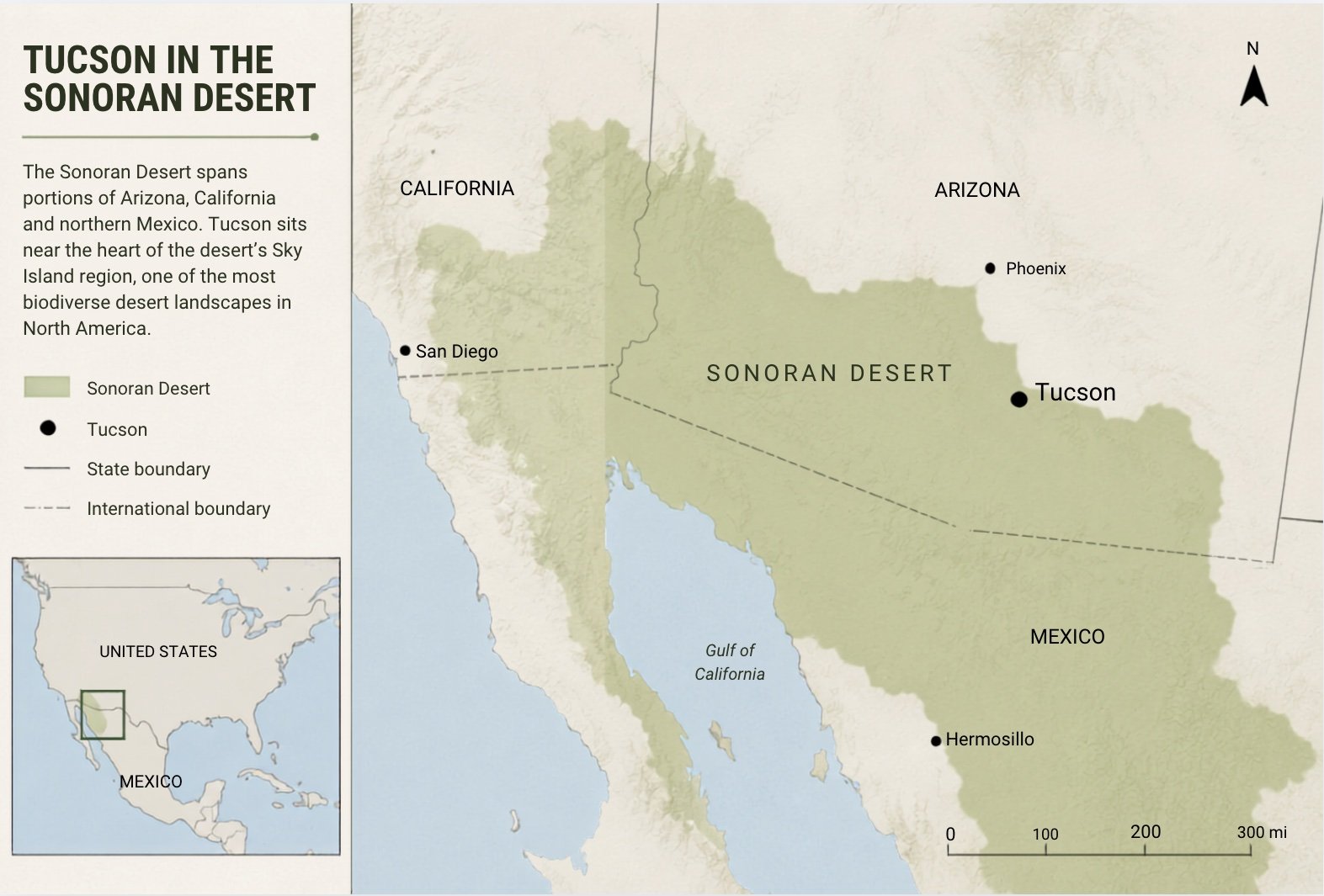
The Sonoran Desert spans parts of Arizona, California and northwestern Mexico and is one of the most biologically diverse deserts in the world. The region's unique climate depends heavily on winter rains and summer monsoons, which provide water for the plants and wildlife that sustain the ecosystem.
Scientists say the condition of the Sonoran Desert is becoming an increasingly important measure of how communities like Tucson are adapting to a hotter, drier future. As native plants and wildlife respond to changing conditions, they offer early warnings of broader environmental stresses that also affect water resources, public health and long-term climate resilience.
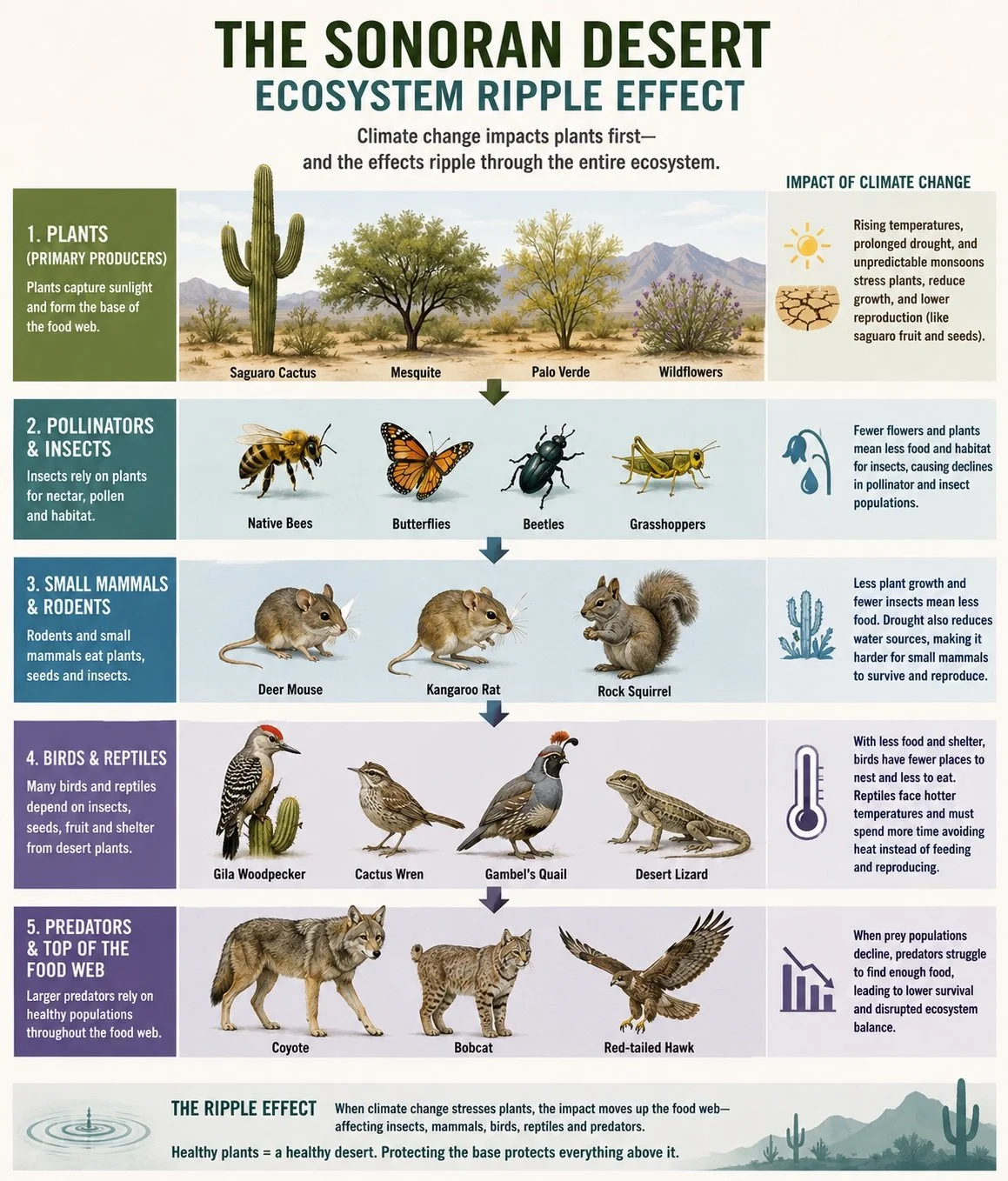
The effects of rising temperatures and prolonged drought are cascading through the ecosystem—stressed plants, declining saguaros cactuses, and the birds, reptiles and other wildlife that depend on them—prompting scientists, conservationists and Tucson officials to consider how the region can protect its biodiversity in a changing climate.
Infographic Courtesy of Avery Ehrig
The Sonoran Desert is Changing
Over the past 50 years, Tucson has warmed by roughly 5 degrees Fahrenheit, contributing to hotter conditions across the Sonoran Desert.
As a result, dry periods between rainstorms have become much longer and more erratic, increasing from about 30 days to roughly 45 days.
These irregular periods without rainfall have significantly worsened drought conditions, with a 25% to 40% drop in average precipitation across Tucson. Even when rain does fall, extreme heat causes much of the water to evaporate before it can soak deeply into the soil, leaving less moisture available for plants. Because of this, 96% of the land in Tucson is currently experiencing drought.
Scientists are becoming increasingly concerned about aridification, a process in which rising temperatures and declining water availability make ecosystems progressively drier.
Aridification doesn’t only affect wildlife. As ecosystems lose moisture and native vegetation declines, scientists say it becomes harder for landscapes to retain water, increasing pressure on the natural systems that help sustain communities across southern Arizona.
“If we look at water as a type of physiological currency, monsoon is a type of payday by which many species budget for essential life functions with a limited capacity to hedge odds,” said Robert Villa, community outreach coordinator at the University of Arizona’s Desert Laboratory on Tumamoc Hill.
Villa mentioned that some of the desert's most iconic species are already showing signs of stress as hotter temperatures and prolonged drought reshape the landscape.
"Drought and extreme temperatures are having huge effects on vegetation cover, species composition and plant health," said Dr. Aaron Flesch, research scientist at the University of Arizona’s Desert Laboratory on Tumamoc Hill. "Many older cacti are being lost and not replaced.”
Native plant population decline can have cascading effects.
It Starts with the Plants
Courtesy of National Park Service
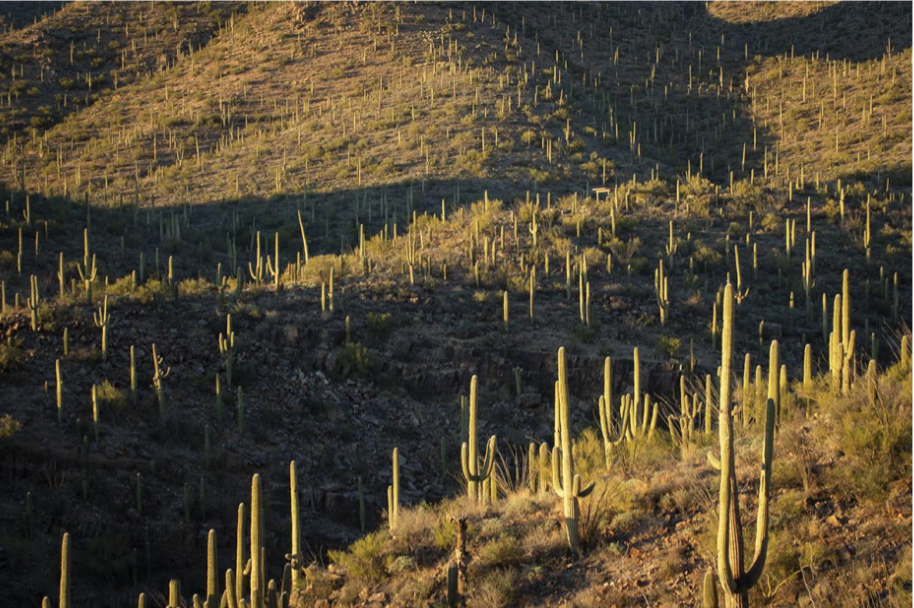
Native plants like the saguaro cactus, palo verde trees, brittle bush and annual wildflowers are foundational to the Sonoran Desert’s ecosystem. Each provides species with crucial habitats, hydration and food such as pollen, nectar, seeds and fruit.
Wildlife in the Sonoran Desert has co-evolved with these plants, depending on them for survival in times of depletion.
"Saguaros are a keystone species whose succulent fruit provides sustenance at a time of year when resources are at their lowest," said Villa. “The health of their populations resonates throughout the entire desert.”
That is why scientists often view saguaros as indicators of ecosystem health. When these keystone plants struggle, the effects extend beyond wildlife, revealing increasing stress on the desert systems that influence soil stability, biodiversity and the region’s ability to capture and retain limited water resources
Saguaros rely on seasonal rainfall to reproduce, making them especially vulnerable to prolonged drought.
"When we see less productivity with the plant community, ultimately that means animals have less to eat," Burns said. "Once that food source goes away, it trickles up the food web."
Wildlife is Feeling the Effects
Wildlife impacts are already becoming visible across the region as drought and heat place additional stress on desert habitats.
"Bird species do seem to show that stress," Burns said. "Gambel's quail populations are really tied into what happens with winter rainfall."
Because quail depend heavily on seasonal vegetation and seeds, drought conditions can make survival and reproduction more difficult. Scientists estimate that changing weather patterns can reduce quail populations by roughly84%.
Quail are only one example of a larger trend. As climate change alters the plants that form the foundation of the Sonoran Desert ecosystem, scientists say the effects can spread throughout the food web, impacting pollinators, birds, reptiles and predators higher up the chain.
For researchers, those changes are more than ecological observations. They provide an early warning that environmental systems supporting both wildlife and people are becoming less resilient under prolonged drought.
Tucson is Responding
As conditions in the Sonoran Desert exceed historical records, Tucson officials and conservation experts are actively trying to combat them.
Officials say protecting wildlife habitat is also a part of protecting the natural systems that support Tucson’s long-term water future. Healthy desert ecosystems help maintain soils, vegetation and watersheds that become increasingly important as climate change places additional pressure on limited water supplies.
"Local governments don't simply have an opportunity to step up to protect wildlife amid our climate crisis — in my mind, they have a moral obligation to do so,” said Tucson City Council Member Miranda Schubert.
Sky Island Alliance works with local communities to support wildlife adaptation through efforts such as installing water sources and removing invasive species.
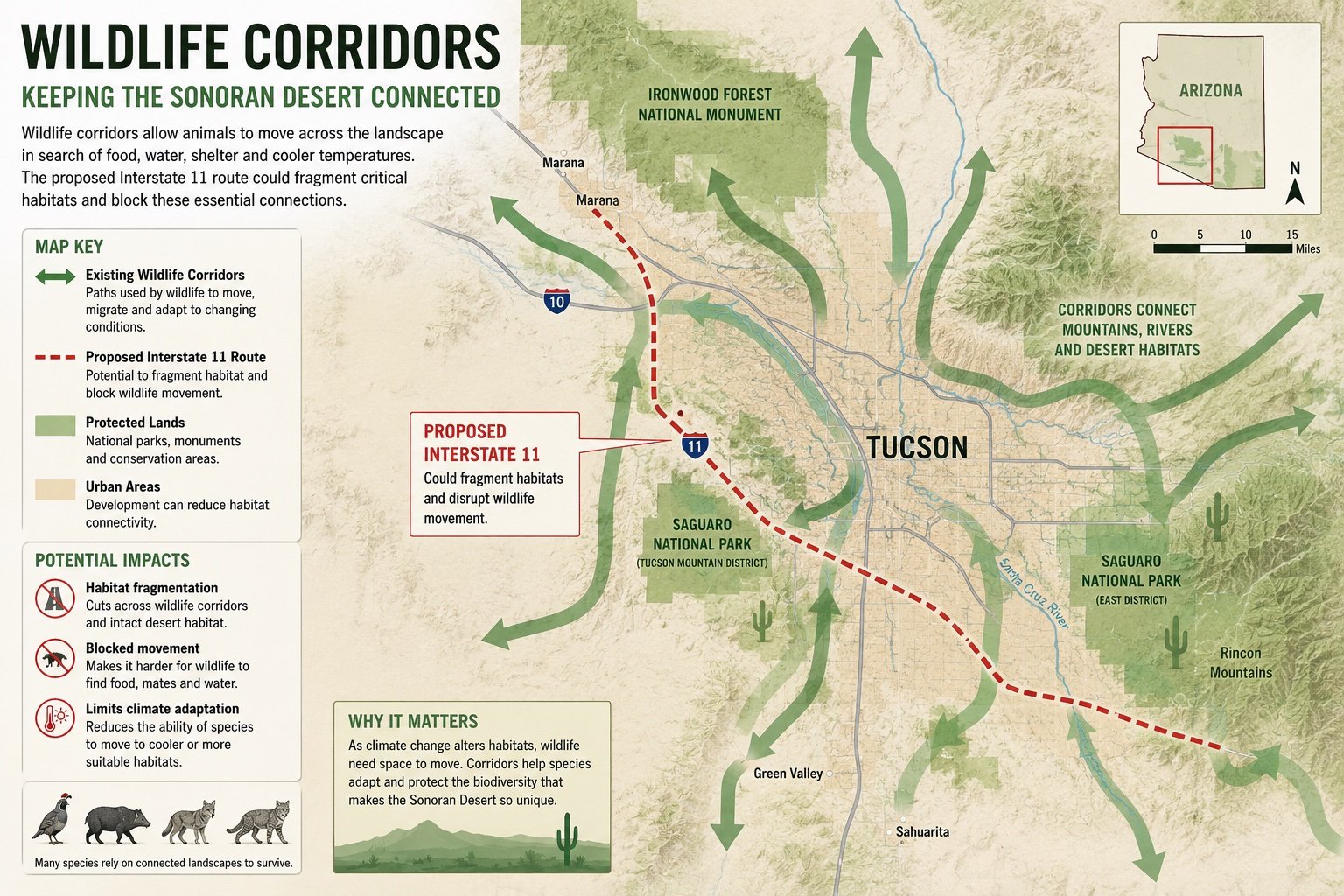
"As climate conditions are changing, we know from a conservation perspective we need to provide corridors and pathways for animals to adapt," said Burns. "Moving around on the landscape is one of the best strategies that animals have as the climate is changing.”
But maintaining those movement corridors can become more complicated as cities continue to grow. One of the most significant land-use debates currently facing southern Arizona is the proposed Interstate 11 corridor.
While one proposed alignment would follow existing highways through Tucson, another option would create a new corridor west of the city near Saguaro National Park and Ironwood Forest National Monument. Conservation groups argue that the western route could fragment habitat and disrupt wildlife movement through one of southern Arizona's most important ecological connections.
"This route would undoubtedly compromise wildlife habitats and existing movement corridors," said Schubert.
Infographic Courtesy of Avery Ehrig
Schubert pointed to Plan Tucson 2025, which incorporates climate adaptation and conservation into several long-term planning efforts.
“One of the plan’s 14 goals focuses specifically on preserving, protecting, and enhancing natural ecosystems,” she said.
Additionally, Schubert mentioned that the city council has been addressing wildlife concerns through many standalone policies and projects, including the Tucson Resilient Together climate action plan and the One Water strategy, which focuses on managing water resources more sustainably while supporting ecosystem health.
Looking ahead, Schubert said one of her biggest concerns is water. As temperatures rise and drought conditions persist across the Southwest, she believes the region's long-term ability to support both people and wildlife will depend on how effectively communities manage increasingly limited resources.
"When people are informed and have opportunities to help change policy and make a difference on the ground, I think it's really helpful," Burns said.
By linking ecosystem health with water conservation, Tucson is treating the health of the Sonoran Desert as part of the city’s climate resilience strategy rather than as a separate conservation issue.
The Sonoran Desert has survived harsh conditions for thousands of years, but scientists, conservationists and local leaders say the challenge now is ensuring its plants, wildlife and ecosystems can adapt quickly enough to a changing climate. Whether they can may become one of the clearest measures of Tucson's ability to remain resilient in an increasingly hotter and drier Southwest.